Linux4.BE Project History
Linux4.BE was a community project (2002--2004) that ported the Linux kernel to the Casio Cassiopeia BE-300 handheld. Founded and coordinated by Filip from Belgium, the project operated from the website linux4.be and brought together a small international team of developers who reverse-engineered the hardware and built a working Linux distribution for the device.
Goals
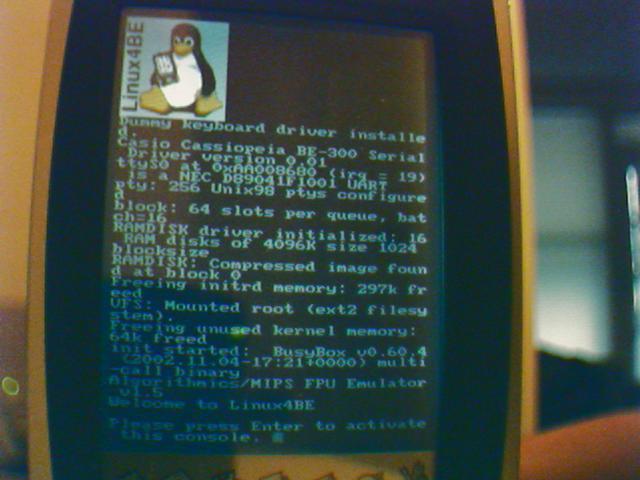
The project aimed to run a standard Linux kernel on the BE-300, a device originally shipped with Windows CE 3.0. Because Casio provided no public hardware documentation beyond the NEC VR4131 CPU datasheet, nearly every peripheral had to be reverse-engineered from scratch. The boot method was deliberately non-destructive --- Linux ran from a CompactFlash card using the CyaCE loader, and a simple reset returned the device to Windows CE.
Key Contributors
| Contributor | Role |
|---|---|
| Filip | Project lead, website admin, kernel builds, memory configuration research |
| jroark (Antagonizt) | Serial driver, kernel builds, ramdisk creation, PicoGUI integration |
| Andrey Shuvikov | Hardware reverse engineering (interrupts, video, touchscreen, serial, CompactFlash) |
| jal0 | Windows cross-toolchain, hardware board mapping, schematics, monitor program |
| Mouse | Linux 2.6 kernel port |
| themaw (Marc) | Kernel collaboration |
| Brian | Contributor |
Timeline
2002
- February: Project starts. Filip creates the linux4.be website and publishes InspectorTux, a WinCE tool for probing device hardware. Initial screen resolution discovery and system information gathering.
- March: Custom flash ROM reading and modification capability achieved. Serial traces captured during factory restore process.
- May: NEC VR4131 preliminary user manual documentation added to the project.
- June: Memory configuration documented --- RAM, ROM, and Flash FAQ published.
- July: Serial driver progress. Kernel patches posted online. Website restructured into sections for different experience levels (dummies, developers, hackers).
- December: jal0 contributes hardware board mapping and button keyboard driver. Schematics and monitor program development.
2003
- January: The "Dummies" howto is published, providing easy-to-follow instructions for non-technical users to boot Linux on the BE-300. This was a milestone for project accessibility. First pre-built Linux packages released.
- 2003 (ongoing): PicoGUI integration, MicroWindows/Nano-X builds, ramdisk improvements. Multiple kernel configurations tested and published.
2004
- Mouse contributes a Linux 2.6.8.1 port, bringing the BE-300 forward to a modern kernel version. The 2.6 port required significant rework of the platform initialization code.
Boot Method
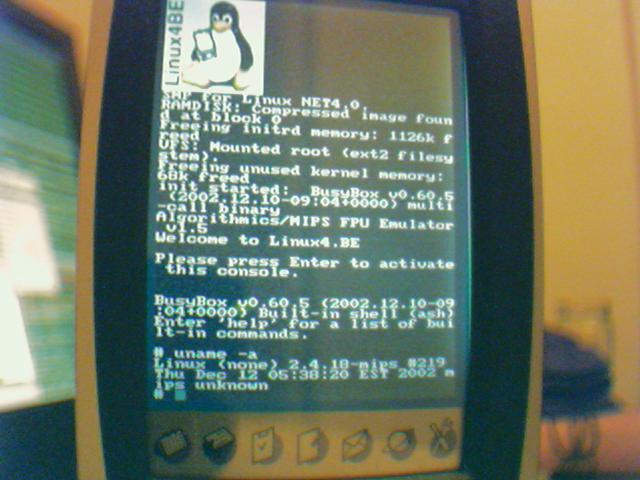
The project used a non-destructive boot method based on the CyaCE loader. Users copied the Linux4BE directory to a CompactFlash card, inserted it into the BE-300, and ran AutoRun.exe. The CyaCE loader loaded the Linux kernel and ramdisk into memory and transferred control. No ROM flashing or permanent modification was required --- pressing the reset button returned the device to Windows CE.
GUI Environments
Several graphical environments were tested on the 320x240 display:
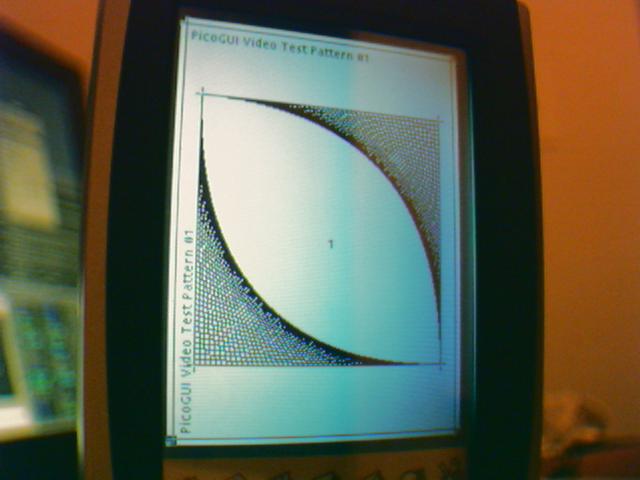
- PicoGUI --- the primary GUI framework, with a working desktop and virtual keyboard
- MicroWindows/Nano-X --- alternative lightweight GUI
- X Window System --- tested and functional
- Qt/Embedded --- build available
Notable Events
Casio Japan visited the linux4.be website multiple times, as confirmed by server access logs. The project was noticed by its target hardware manufacturer, though no official collaboration resulted.
Legacy
The linux4.be website has been preserved from archive.org and is browsable in the archive section of this wiki. The kernel source, tools, and documentation remain valuable as the most thorough public reverse-engineering effort of the BE-300 hardware.